
Table of Contents
- What a Professional Appliance Inspection Actually Covers
- Signs Your Appliances Need Professional Service
- Your Appliance Maintenance Checklist: DIY vs. Professional Tasks
- Appliance Repair vs. Replacement: How to Decide
- Cost of Appliance Inspection and What Affects Pricing
- How to Book a Professional Appliance Inspection Today
- Benefits of Preventative Appliance Maintenance
- Frequently Asked Questions
Last Updated: September 2, 2026
Most homeowners don’t think about their appliances until something breaks. At Bell Appliance Repair LLC, we’ve seen this pattern play out hundreds of times since 2017, and the fix is almost always the same: a professional appliance inspection, scheduled before the crisis hits. This guide walks you through exactly what an inspection covers, how to spot warning signs early, and how to book professional appliance inspection service today.
What a Professional Appliance Inspection Actually Covers
A professional appliance inspection is a systematic diagnostic evaluation of a home appliance’s mechanical, electrical, and safety systems, performed by a technician using diagnostic tools. It goes well beyond a visual check and identifies wear, inefficiency, and safety risks before they become failures.
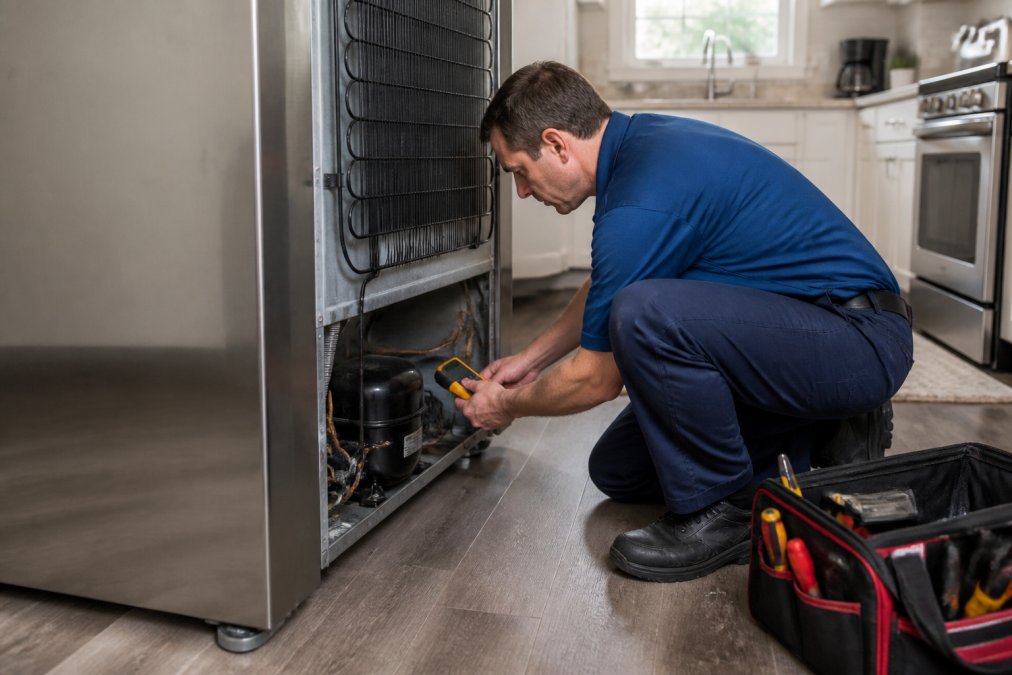
Component Testing and Electrical Integrity Checks
A technician will test motors, pumps, heating elements, thermostats, control boards, and seals to assess appliance performance under real operating conditions. For a refrigerator, that means checking compressor function, refrigerant levels, condenser coil condition, and door seal integrity. For a washer or dryer, it means evaluating drum bearings, belt tension, water inlet valves, and heating circuits.
Electrical integrity checks are equally important. Loose connections, corroded terminals, and failing capacitors are common culprits behind intermittent failures and fire hazards. A technician will use diagnostic tools to measure voltage draw, test for ground faults, and verify that the appliance is operating within manufacturer specifications.
Ask your technician to check the control board during any inspection. Control boards are expensive to replace but often show early signs of failure through error codes that only diagnostic tools can read.
Safety Hazard Identification
Gas ranges and dryers require checks for gas line integrity and combustion efficiency. Dishwashers and washing machines need water damage assessments to identify slow leaks that can cause mold growth inside walls and under flooring.
According to the U.S. Fire Administration’s guidance on home appliance fires, dryers are among the leading appliance-related causes of residential fires, with lint buildup and faulty heating elements cited most frequently. A safety-focused inspection catches these conditions before they escalate.
Signs Your Appliances Need Professional Service
Performance changes are the most obvious signal. A refrigerator that runs constantly but can’t hold temperature, a dryer that takes two cycles to dry a load, or a dishwasher that leaves residue on dishes are all showing signs of component degradation.
Unusual sounds deserve immediate attention. Grinding, rattling, banging, or high-pitched squealing from any major appliance typically indicates a mechanical component under stress.
Visible wear or leaks are non-negotiable flags. Water pooling under a washer or refrigerator, rust around door seals, or burn marks near electrical connections should prompt a service call the same day.
Error codes on modern appliances are diagnostic gifts. Most digital control panels store fault codes that a technician can read with the right tools.
Ignoring a grinding noise from a washing machine drum bearing is one of the most common and costly mistakes homeowners make. A bearing replacement is a straightforward repair. A bearing that fails completely can damage the drum shaft, turning a $150 fix into a $400+ job or a replacement decision.
Your Appliance Maintenance Checklist: DIY vs. Professional Tasks
The appliance maintenance checklist most homeowners need requires knowing which tasks are genuinely safe to handle yourself and which ones require a technician.
| Task | DIY or Professional | Frequency |
|---|---|---|
| Clean refrigerator condenser coils | DIY | Every 6 months |
| Inspect and clean dryer lint trap | DIY | After every load |
| Check washing machine hoses for cracks | DIY | Every 3 months |
| Test oven temperature accuracy | DIY | Annually |
| Inspect gas line connections | Professional only | Annually |
| Test electrical integrity and voltage draw | Professional only | Annually |
| Diagnose control board error codes | Professional only | As needed |
| Assess refrigerant levels | Professional only | As needed |
| Full appliance diagnostics and tune-up | Professional only | Every 1-2 years |
What You Can Check Yourself
Homeowners can handle meaningful preventative maintenance without tools. Cleaning refrigerator condenser coils removes accumulated dust that forces the compressor to work harder. Inspecting washing machine inlet hoses for bulging or cracking takes two minutes and can prevent a burst hose flood. Clearing the dryer vent duct from the exterior reduces fire risk.
What a Certified Technician Handles
Anything involving gas connections, refrigerant systems, or live electrical components requires a trained technician. According to the Consumer Product Safety Commission’s appliance safety guidance, improper DIY repair of gas appliances is a documented cause of residential carbon monoxide incidents. Professional assessment of these systems is the difference between preventative care and creating a new hazard.
A technician also brings diagnostic tools that aren’t available to homeowners. Accurate component testing, refrigerant measurement, and electrical integrity analysis require calibrated equipment and proper training.
Appliance Repair vs. Replacement: How to Decide
The repair vs. replace decision depends on three factors working together.
The 50% rule is a useful starting point. If the estimated repair cost exceeds 50% of the appliance’s current replacement value, replacement is generally the better financial decision.
Appliance age and expected lifespan matter enormously. Most major appliances have well-documented average lifespans: refrigerators typically last 13-17 years, washing machines 10-14 years, dishwashers 9-12 years, and gas ranges 15-20 years. An appliance near the end of its expected lifespan that needs a significant repair is likely to need another one within a year or two.
Frequency of past repairs is the clearest signal. An appliance that has needed two or more service calls in the past three years is showing a pattern of system failure. At that point, continued repair investment is often throwing good money after bad.
The repair vs. replace decision isn’t just about the current repair cost. It’s about the appliance’s remaining lifespan and repair history together. A technician who inspects the full unit can give you a far more accurate picture than one who only quotes the immediate fix.
Cost of Appliance Inspection and What Affects Pricing
The cost of appliance inspection varies based on several factors, and Bell Appliance Repair LLC recommends contacting us directly for current pricing rather than relying on general estimates.
What drives the cost of a professional inspection:
- Appliance type and complexity. A gas range with electronic ignition requires more diagnostic time than a basic electric dryer.
- Number of appliances. Many service providers offer reduced per-unit pricing when multiple appliances are inspected in a single service call.
- Scope of service. A basic safety inspection covers fewer checkpoints than a full appliance diagnostics and tune-up package.
- Service timing. Same-day and next-day service availability may carry a premium over standard scheduled appointments.
Always ask for a clear repair estimate before any work begins, confirmation of what the service call fee covers, and whether diagnostic costs are applied toward the repair if you proceed.
How to Book a Professional Appliance Inspection Today
Booking a professional appliance inspection is straightforward, and same-day service is often available for urgent situations.

To book professional appliance inspection service with Bell Appliance Repair LLC, call (240) 230-7699. Our team will ask a few quick questions about the appliance, the symptoms you’re seeing, and your availability.
Here’s what to have ready when you call:
- Appliance make, model, and age (usually on a label inside the door or on the back panel)
- Description of the symptoms (sounds, error codes, performance changes, visible issues)
- Your availability for a service call, including whether you need a weekend appointment
- Any previous repair history for the appliance, if relevant
A technician will arrive at the scheduled time, perform the inspection, and provide a written assessment with any recommended repairs and associated costs before any work begins.
Same-Day and Next-Day Service Availability
Same-day scheduling is available for urgent appliance failures. If your refrigerator stopped working overnight and you’re concerned about food spoilage, call first thing in the morning. Next-day service is available for non-urgent inspections and preventative maintenance appointments.
The more specific you are about symptoms when you call, the faster the technician can diagnose and resolve the issue on the first visit.
Benefits of Preventative Appliance Maintenance
Preventative maintenance is the part of appliance care that most homeowners skip, and it’s the part that saves the most money over time. A tune-up that catches a failing component costs far less than an emergency repair after that component causes a system failure.
Energy efficiency. Appliances running with dirty coils, worn seals, or struggling motors draw more power to do the same work. An energy efficiency audit as part of an inspection can identify where an appliance is wasting electricity. As documented in the Department of Energy’s guidance on home appliance efficiency, well-maintained appliances consistently outperform neglected ones in energy consumption.
Appliance longevity. Regular professional assessment extends appliance lifespan by catching small problems before they cascade. A washing machine bearing caught early is a $150 repair. The same bearing left to fail completely can damage the drum, shaft, and cabinet.
Safety and peace of mind. Gas leaks, electrical faults, and water damage develop quietly until they don’t. A professional safety inspection is the only reliable way to know that the appliances running in your home aren’t creating hazards you can’t see.
Most appliance manufacturers recommend professional maintenance every one to two years, depending on usage.
Appliance failures rarely happen at a convenient time, and the cost of waiting is almost always higher than the cost of acting early. Bell Appliance Repair LLC has been providing fast, reliable appliance inspection and repair services since 2017, with a straightforward commitment: show up on time, diagnose it accurately, and fix it right the first visit. Call (240) 230-7699 to book your appointment today.
Frequently Asked Questions
Q: What is included in a professional appliance inspection?
A: A professional appliance inspection covers component testing, electrical integrity checks, and safety hazard identification. A technician examines motors, seals, hoses, heating elements, and control boards using diagnostic tools. You receive a repair estimate and a clear picture of your appliance’s health, so you can decide whether to repair or replace before a small issue becomes a system failure.
Q: How often should you have your home appliances inspected?
A: Most appliance manufacturers and service professionals recommend a preventative maintenance check once a year for major appliances like refrigerators, washers, dryers, and dishwashers. High-use appliances or older units may benefit from a service call every six months. Annual inspections catch wear early, extend appliance longevity, and help you avoid emergency repairs. If you notice unusual noises, higher energy bills, or performance drops, schedule a professional assessment sooner.
Q: How much does a professional appliance inspection cost?
A: The cost of an appliance inspection varies based on the appliance type, its age, and the scope of the diagnostic work required. Service fees differ between providers, and some companies roll the inspection fee into the repair estimate if you proceed with the work. For accurate pricing from Bell Appliance Repair LLC, call (240) 230-7699 or visit the website to request a quote for your specific appliance and situation.
Q: How do I find a certified appliance technician near me?
A: Search for trained technicians who specialize in your appliance brand. Check that the company has verifiable experience, clear warranty coverage on parts and labor, and a track record of showing up on time. Bell Appliance Repair LLC has served Waldorf and surrounding areas since 2017, with expert local technicians available for same-day and next-day service appointments. Call (240) 230-7699 to schedule your service request today.
This article was written using GrandRanker